Full-scale war has exacerbated the crisis of access to basic healthcare services in Ukraine. Damaged infrastructure, disrupted transportation networks, the migration of qualified medical personnel to large cities, and the enormous economic burden on families have pushed preventive medicine to the margins of public attention. Women living in rural, frontline, or hard-to-reach areas have become the most vulnerable.
When the nearest district hospital is dozens of kilometers away along broken roads, and the local paramedic and midwife station has gone years without a permanent specialist, visits to the doctor are put off indefinitely. To reverse this trend and bring vital medical services closer to women, a network of mobile sexual and reproductive health teams has been launched in Ukraine.
Joint initiatives by the Ministry of Health of Ukraine and UNFPA, the United Nations Population Fund in Ukraine, are aimed at protecting reproductive health, preventing gender-based violence, and improving medical services.
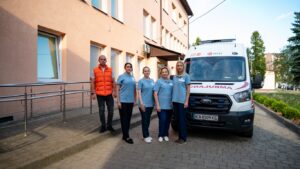
These mobile clinics are not just another round of medical outreach visits, but fully autonomous clinics on wheels, equipped with modern portable ultrasound machines, cardiotocographs, colposcopes, kits for collecting cytological and bacteriological samples, rapid tests for HIV, hepatitis B/C, and syphilis, as well as necessary hygiene and protective supplies. The teams consist of highly qualified obstetricians-gynecologists, ultrasound diagnosticians, and midwives. Their primary mission is to provide every woman, including internally displaced persons, with free, barrier-free, and confidential care.
The Morning Before a Call-Out: Autonomy and Safety Standards
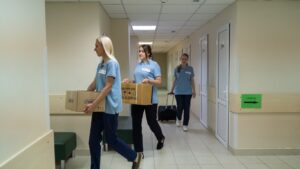
The team’s work begins long before the first patient appointment. The success of every call-out depends on meticulous preparation and strict adherence to infection control protocols.
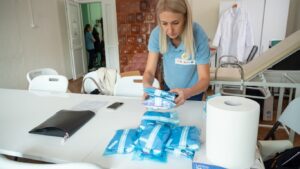
“Before every trip, we stock our vehicle. We bring disposable gynecological kits, high-quality gel for ultrasound examinations, barrier protection, pads, gloves, and specimen collection kits. The patient shouldn’t have to worry about a thing. We provide all consumables in full,” explains Natalia Mila, coordinator of the mobile team and an obstetrician-gynecologist.
For many communities, the arrival of such a vehicle was an event of extraordinary significance.
“It is extremely difficult for patients living in remote areas to travel to district centers, let alone regional ones. Not all villages today have functioning rural health posts where they could receive a consultation. The arrival of our mobile team is often their only real opportunity to undergo a comprehensive examination,” emphasizes Natalia Mila.

The specialist emphasizes that the package of services is focused on preventing life-threatening diseases. Cervical and breast cancer are asymptomatic in their early stages. Cytology screening (Pap tests), microflora swabs, high-quality ultrasound diagnostics, and screening consultations make it possible to detect precancerous conditions in a timely manner and refer women for treatment before irreversible complications arise.
When the doctors from the mobile medical team arrive at the village health clinic, the community’s usual rhythm changes briefly, and the women finally find time for themselves.
“In the village, there’s never enough time to focus on our own health: every day is filled with farm work, jobs, and chores. But this is incredibly convenient because the specialists arrived at a specific time, examined us right away, performed an ultrasound, and gave us the results immediately—without wasting entire days traveling,” Lesya shares.
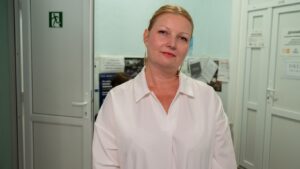
The team’s complete self-sufficiency has also been a real relief for local women. Oksana points out that women don’t have to rush to the pharmacy in advance with a list of medications or buy gynecological kits, because the doctors bring everything they need with them.
“Everything is right there—the ultrasound machine, attentive specialists, and a detailed consultation. I sincerely recommend that everyone make an appointment as soon as the team arrives in the community,” the patient emphasizes.
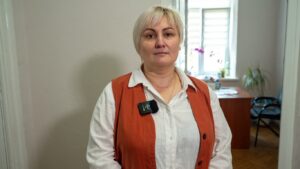
In addition to convenience and speed, patients note the genuine care shown by the medical staff. Lida says the doctor was extremely attentive: he took his time explaining everything, literally broke down every detail step by step, and provided clear, personalized advice:
“All women who come in for an appointment should get a checkup at least once a year to make sure everything is okay and to regain their peace of mind, because here there are incredibly qualified specialists, a wonderful attitude, and comprehensive answers to all concerns. It’s fast, stress-free, and truly high-quality,” says patient Iryna.

“Everything in One Room”
A key advantage of the SRZ model is its integrated approach. Typically, to undergo an examination and have an ultrasound, a woman needs to visit several specialists on different days. The mobile team eliminates this time gap.
“Patients are pleasantly surprised to have the opportunity to undergo both a gynecological exam and high-quality ultrasound diagnostics right here, on the spot,” notes Yulia Mila, an ultrasound diagnostician.
This approach resonates deeply with community residents. Patients praise the service, which shatters stereotypes about outdated rural healthcare.
The culture of taking care of one’s own reproductive health in Ukraine still faces psychological barriers and feelings of shame, fear of receiving an unpleasant diagnosis, or the sense that family needs are more important than one’s own physical well-being:
“If women and girls living in remote villages have the opportunity to see these doctors, I sincerely advise them not to put it off. A woman always has time for her children, her husband, her home, and endless chores. But those few hours dedicated to her own health are truly crucial for life,” urges patient Olga.
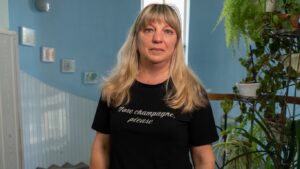
The SRZ mobile teams are not a temporary solution, but a vital bridge to social justice in healthcare. They restore women’s sense of dignity, security, and confidence in their own future, even during the country’s most challenging times.
The mobile gynecological teams operate as part of the humanitarian response efforts of UNFPA, the United Nations Population Fund in Ukraine, with financial support from Spain and in cooperation with the All-Ukrainian Charitable Organization “Convictus Ukraine.”